Investment

Hello LandBank

Briefly explore cost advantages of eco-industrial parks

Introduction Eco-industrial parks (EIPs) are transforming the way industries function by embedding sustainability into the very design and operation of industrial zones. Unlike traditional industrial parks that focus solely on productivity and output, EIPs integrate environmental management, resource efficiency, and circular economy principles to create mutual benefits among co-located businesses....
Hello LandBank

Detailed case studies on eco-industrial land projects

Introduction Eco-industrial land projects represent a transformative shift in how industries operate, develop, and coexist with the environment. As global concerns about climate change, pollution, and resource depletion intensify, governments and industries are increasingly turning to sustainable models of industrial growth. Eco-industrial parks (EIPs) are designed to reduce environmental impacts...

Hello LandBank

Define water conservation strategies in industrial developments

Introduction Water is a critical input for most industrial operations, serving functions such as cooling, cleaning, processing, and manufacturing. As freshwater resources face increasing stress due to urbanization, climate change, and population growth, water conservation has become a strategic necessity in industrial developments. Effective water management not only ensures operational continuity but...

Hello LandBank

Explain waste management systems in eco-industrial zones

Introduction Waste management in eco-industrial zones (EIZs) is a critical pillar of sustainable industrial development. Unlike traditional industrial zones that operate in isolation, EIZs are built on the principles of resource efficiency, circular economy, and industrial symbiosis, where waste from one process becomes a resource for another. Effective waste management systems in these zones ensure...

Hello LandBank

Introduction to eco-friendly construction materials for industrial use

Introduction Eco-friendly construction materials are becoming indispensable in the planning, development, and modernization of industrial infrastructure. As global attention intensifies around climate change, resource conservation, and sustainable development, industries are under increasing pressure to reduce their environmental footprint—starting from the ground up. In this context, the selection...

Hello LandBank

Establish partnerships for eco-industrial park success

Introduction Eco-industrial parks (EIPs) represent a transformative model for sustainable industrial development, integrating environmental stewardship, economic efficiency, and community well-being. Unlike conventional industrial zones, EIPs emphasize resource optimization, shared services, renewable energy use, and waste-to-resource loops among co-located businesses. The success of an eco-industrial...

Hello LandBank

Describe carbon footprint reduction methods in land development

Introduction Reducing the carbon footprint in land development has become a key objective in sustainable construction and industrial planning. With climate change concerns growing globally, land developers are increasingly expected to minimize greenhouse gas (GHG) emissions throughout the entire development lifecycle—from site preparation and construction to infrastructure installation and long-term...

Hello LandBank

Briefly highlight sustainable infrastructure in industrial parks

Introduction Sustainable infrastructure in industrial parks represents a forward-thinking approach to industrial development that integrates environmental responsibility, economic efficiency, and social inclusivity. As industrial parks evolve into high-performance economic zones, the demand for infrastructure that reduces environmental impact, optimizes resource consumption, and enhances long-term...

Hello LandBank

Detailed checklist for eco-industrial land certification

Introduction Eco-industrial land certification is a structured process that validates whether an industrial park or zone meets defined environmental, social, and resource efficiency standards. This certification is often issued by government agencies, international organizations, or green building and sustainability rating systems such as LEED, GRIHA, BREEAM, EDGE, or UNIDO’s International Framework...

Hello LandBank

Define circular economy practices in eco-industrial development

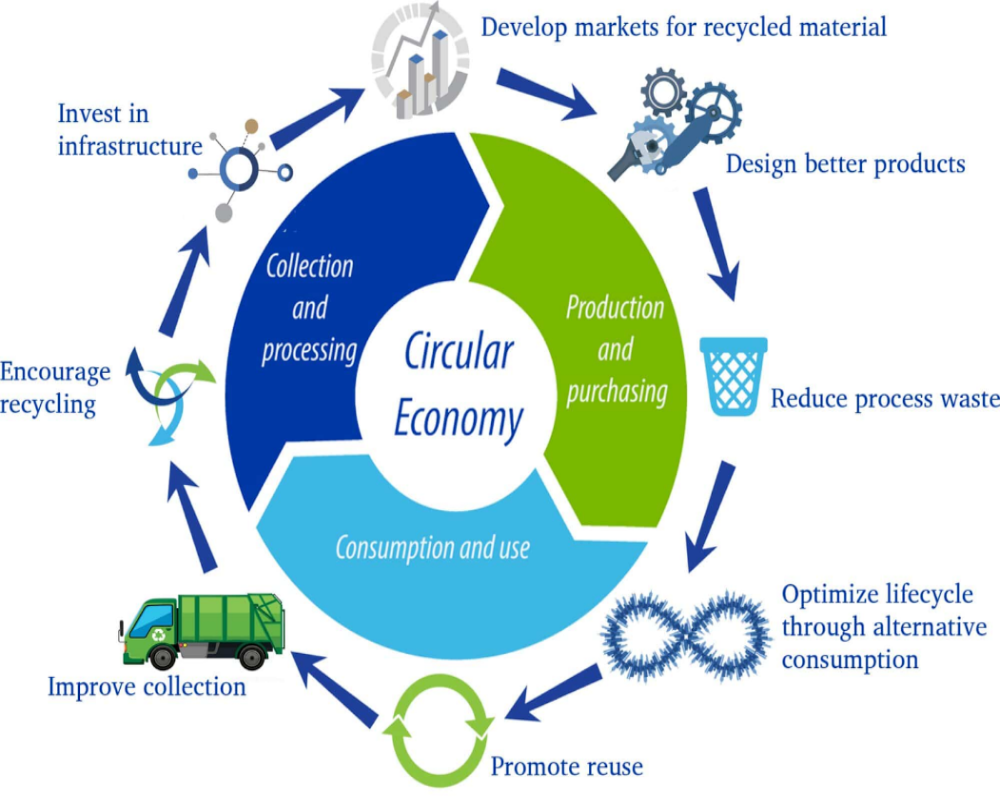
Introduction Circular economy practices lie at the heart of eco-industrial development, offering a radical departure from the traditional linear economic model of “take, make, use, dispose.” Instead of extracting raw materials, using them to manufacture products, and then discarding waste, a circular economy strives to keep resources in use for as long as possible, extract maximum value from them,...

Compare listings

Compare