

Introduction
The fueling infrastructure for land-based stations serves as the backbone of mobility across urban and rural landscapes. These infrastructures, whether for traditional fossil fuels or emerging alternatives like electricity and hydrogen, enable the consistent operation of personal vehicles, public transport, and commercial fleets. Building a robust and safe fueling infrastructure requires a thorough understanding of each component, its function, and how it interacts with broader systems such as utilities, environmental safeguards, and user interfaces. The increasing diversification of fuel types has further broadened the scope and complexity of this infrastructure. This detailed overview breaks down the key components that comprise the fueling infrastructure for land-based stations and explains their essential role in ensuring efficient and compliant operations.
1. Site Selection and Land Assessment
Before installing fueling infrastructure, choosing the right site is critical. The land must meet several criteria: strategic location, ease of access, visibility, and favorable zoning regulations. For traditional gas stations, access to high-traffic roads and intersections is essential to attract vehicles, while EV charging stations may also benefit from placement near retail areas where users can spend time while charging.
Land assessment includes geotechnical surveys, environmental impact evaluations, and topographical studies. Fueling stations require stable soil conditions to support underground tanks or equipment foundations. Proper drainage and flood risk assessment are crucial to prevent contamination or operational hazards. Legal and regulatory reviews ensure that the land is not subject to restrictions that might hinder construction or long-term operation. Additionally, understanding future urban development plans helps ensure that the station remains relevant and accessible over time.
2. Design and Layout Considerations
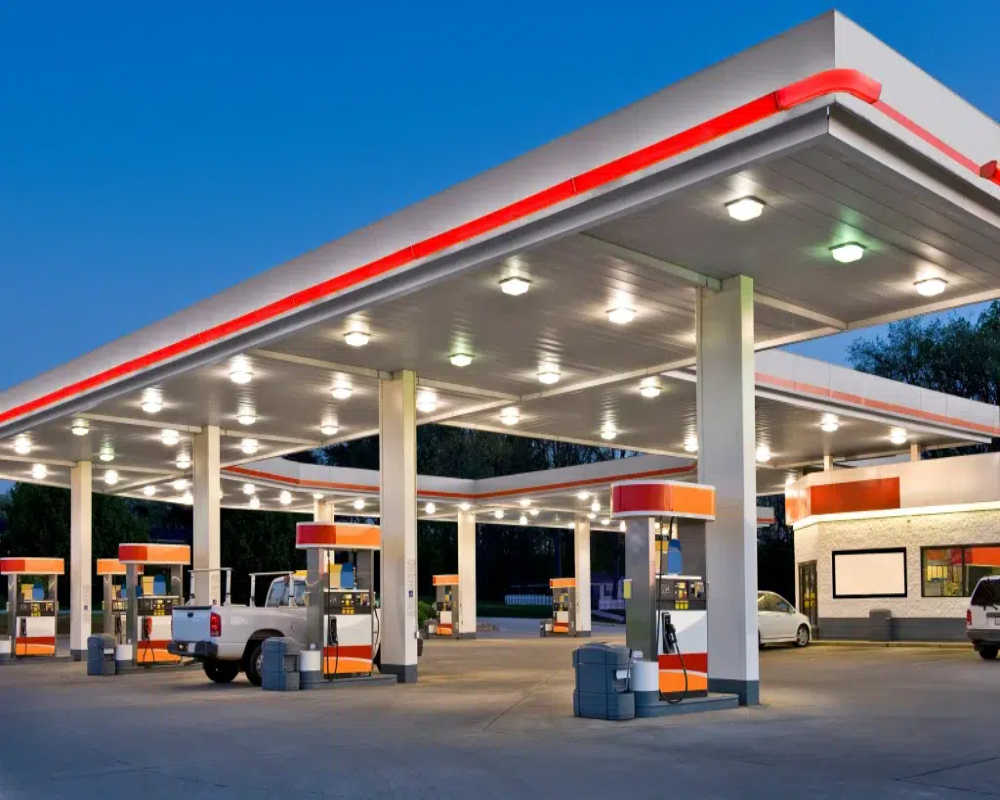
Once a site is approved, design and layout planning focuses on safety, traffic flow, and efficient use of space. For gasoline and diesel stations, layouts must include fueling islands with dispensers, underground storage tanks (USTs), ventilation systems, fire separation zones, and spill containment features. Canopies provide shelter and help with lighting integration. Safe ingress and egress points are carefully planned to accommodate different vehicle types, including large trucks.
EV stations require different considerations. Design includes charger placement with adequate spacing for maneuverability, protected parking bays, weather-resistant enclosures, and cable management systems. The layout must support pedestrian safety, ADA (Americans with Disabilities Act) compliance, and ease of customer navigation. Shared features, such as restrooms, convenience stores, or lounges, may be integrated for user comfort. For both gas and EV stations, the design must also accommodate maintenance access, signage, emergency systems, and future expansion capabilities.
3. Power and Fuel Infrastructure
Power and fuel delivery systems are the core operational elements of any fueling station. For conventional stations, this includes large underground storage tanks made of corrosion-resistant materials, with vent pipes, fill points, and monitoring systems. Pumps and dispensers draw fuel from these tanks through double-walled piping to prevent leaks. Vapor recovery systems capture emissions during refueling to meet air quality standards. The fueling system also includes emergency shut-off valves, automatic leak detectors, and pressure sensors to maintain safe operations.
In contrast, EV charging stations rely on advanced electrical infrastructure. Key components include utility-grade transformers, switchgear, electrical panels, conduits, circuit breakers, and energy meters. Depending on the charger type (Level 2 or DC fast charging), the station requires different voltage and amperage configurations. Power systems are usually integrated with the grid but may also include on-site energy generation like solar panels and battery energy storage systems (BESS) to reduce demand charges and improve sustainability. Backup power options such as diesel generators may be provided in critical locations to ensure uninterrupted service.
4. Environmental and Regulatory Compliance
Environmental responsibility is central to fueling infrastructure development. Gasoline and diesel stations are subject to stringent environmental regulations concerning fuel storage, spill prevention, air quality, and groundwater protection. Components such as double-walled tanks, overfill protection devices, and containment sumps minimize the risk of leaks and contamination. Stations must also implement stormwater management systems and comply with the Clean Water Act and hazardous materials handling regulations.
EV stations generally present a lower environmental risk but still require regulatory compliance regarding electrical safety, electromagnetic radiation exposure, and construction permits. Environmental impact assessments may still be needed, especially in ecologically sensitive areas. Local building codes, fire safety standards, accessibility laws, and utility coordination are critical for approval and operation. Compliance documentation, including site plans, permits, and operational safety manuals, is mandatory for both types of stations and must be regularly updated to reflect any modifications.
5. Future-Proofing and Technological Integration
With technology evolving rapidly, the fueling infrastructure must be designed with future growth and adaptability in mind. For traditional gas stations, future-proofing includes the capacity to add alternative fuels such as biodiesel, ethanol, or hydrogen. Automation in fuel dispensing, contactless payment systems, and remote monitoring technology enhance operational efficiency and reduce labor costs.
For EV infrastructure, future-proofing involves ensuring sufficient grid capacity, scalable charger installations, and smart grid compatibility. Stations may integrate V2G (vehicle-to-grid) technology, which allows EVs to feed energy back into the grid during peak demand. Advanced software platforms enable real-time monitoring of charger performance, power usage, and maintenance alerts. Integration with mobile apps and navigation systems enhances user experience by providing availability, pricing, and reservation options. Additionally, renewable energy integration through photovoltaic systems and on-site energy storage positions EV stations as sustainable and resilient facilities.
Conclusion
Developing a fueling infrastructure for land-based stations involves more than simply installing fuel pumps or chargers—it is a sophisticated engineering process that requires careful planning, strategic site selection, robust technical components, and strict adherence to regulatory standards. Whether catering to gasoline vehicles or electric mobility, each element of the infrastructure must be integrated to deliver reliable, safe, and user-friendly service. As the industry moves toward cleaner fuels and smart technology, the need for scalable, future-ready fueling infrastructure becomes even more pressing. With thoughtful design and continuous innovation, these stations can serve as vital links in the transportation network, ensuring mobility while supporting environmental and economic sustainability.
Hashtags
#FuelingInfrastructure #LandBasedStations #EnergySolutions #SustainableFuel #InfrastructureDevelopment #CleanEnergy #FuelStationDesign #RenewableEnergy #TransportationInfrastructure #EnergyEfficiency #AlternativeFuels #SmartStations #FuelTechnology #GreenEnergy #StationComponents #EnergyStorage #HydrogenFuel #ElectricVehicleCharging #InfrastructureInnovation #FuelDistribution #UrbanMobility #FutureOfTransport #EnergyTransition #SustainableTransport #InfrastructurePlanning


