Investment

Hello LandBank

Establish importance of connectivity in industrial land investments

Introduction Connectivity is one of the most decisive factors influencing the success and value of industrial land investments. In today’s globalized and supply chain–driven economy, the ability to move raw materials, goods, personnel, and services quickly and efficiently is fundamental to industrial productivity and profitability. Industrial land that is well-connected to transportation networks,...

Hello LandBank

Introduction to infrastructure-linked strategies for industrial investors

Introduction Infrastructure-linked strategies have become a defining framework for modern industrial investment. In an increasingly competitive and logistics-driven economy, infrastructure is no longer seen as a backdrop to industrial activity—it is a strategic asset and enabler. Industrial investors, whether institutional funds, corporate developers, or private equity players, are recognizing the...

Hello LandBank

Describe proximity advantages to major infrastructure hubs

Introduction Proximity to major infrastructure hubs—such as highways, seaports, airports, railway terminals, and logistics parks—offers a significant competitive edge in land investment and development, especially in industrial and commercial contexts. These hubs act as critical nodes in the movement of goods, people, and services, and their influence extends far beyond logistics. For industrial...

Hello LandBank

Briefly describe key infrastructure drivers for land investment

Introduction Infrastructure is a fundamental catalyst in land investment, especially in industrial, commercial, and mixed-use real estate sectors. As economies grow and urbanize, infrastructure development not only enables but also accelerates the productive use and value of land. Whether it's for manufacturing, logistics, retail, or residential purposes, the presence and quality of surrounding...

Hello LnadBank

Detailed overview of infrastructure impact on land valuation

Introduction Infrastructure plays a decisive role in shaping the value of land, especially in regions designated for industrial, commercial, or mixed-use development. Its impact goes beyond mere convenience—it fundamentally transforms land from a passive physical asset into a dynamic economic resource. Whether through roads, power lines, ports, water supply systems, or digital connectivity,...

Hello LandBank

Define infrastructure-linked industrial land investments

Introduction Infrastructure-linked industrial land investments refer to the strategic acquisition or development of industrial land that is directly supported by existing or planned infrastructure such as roads, railways, ports, power grids, water supply, and digital connectivity. These investments are typically located within industrial corridors, special economic zones (SEZs), logistics hubs, or...

Hello LandBank

Explain infrastructure-linked investment benefits for industrial land buyers

Introduction In the rapidly evolving industrial landscape, infrastructure-linked investments have become a cornerstone strategy for industrial land buyers seeking long-term value, operational efficiency, and strategic advantage. Infrastructure refers to the essential physical and organizational facilities—such as transport systems, energy grids, water supply, and communication networks—that enable...

Hello LandBank

Establish project timelines for industrial corridor developments

Introduction Developing an industrial corridor is a large-scale, multi-year endeavor that unfolds in structured phases, each requiring coordinated efforts from government bodies, private investors, infrastructure developers, and regulatory institutions. Unlike standalone infrastructure or real estate projects, industrial corridors involve the creation of economic ecosystems stretching across regions,...

Hello LandBank

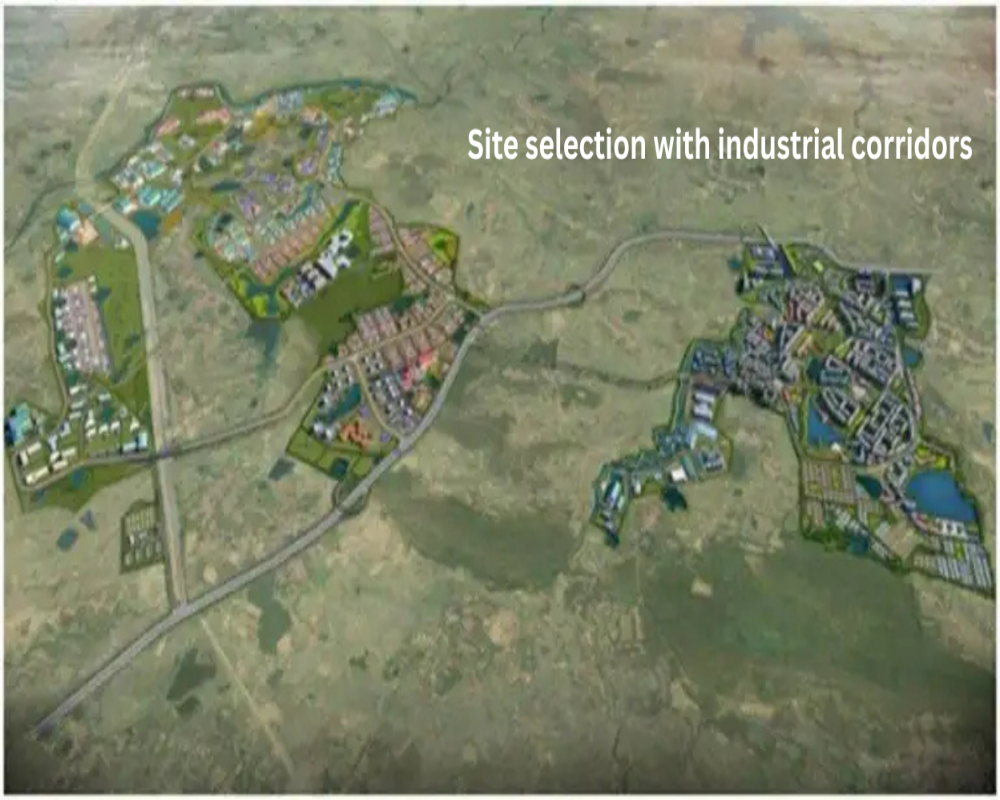
Describe site selection within industrial corridors

Introduction Site selection within industrial corridors is a highly strategic process that can determine the long-term success of industrial, logistics, or infrastructure investments. Unlike traditional real estate development, site selection in industrial corridors involves evaluating a range of economic, operational, environmental, and regulatory factors that align with the corridor’s broader...

Hello LandBank

Briefly discuss exit strategies in corridor investments

Introduction Industrial corridor investments are long-term ventures rooted in strategic planning, policy alignment, and infrastructure-led development. While entering these markets offers substantial upside through capital appreciation, rental income, and industrial demand, the ability to successfully exit an investment is equally critical. Exit strategies ensure liquidity, risk management, and...

Compare listings

Compare