

Introduction
The term “industrial corridor” has gained substantial prominence in the landscape of economic planning and land investment, particularly in emerging markets undergoing rapid industrialization. In the context of land investment, an industrial corridor refers to a specifically designated and geographically structured region that is developed to support industrial activities, infrastructure development, and economic linkages. These corridors are designed with the intention of enhancing productivity, attracting capital, and encouraging sector-specific growth. For investors focused on industrial land, the corridor acts as a catalyst, offering strategic advantages that go beyond conventional real estate investments.
Concept and Strategic Importance
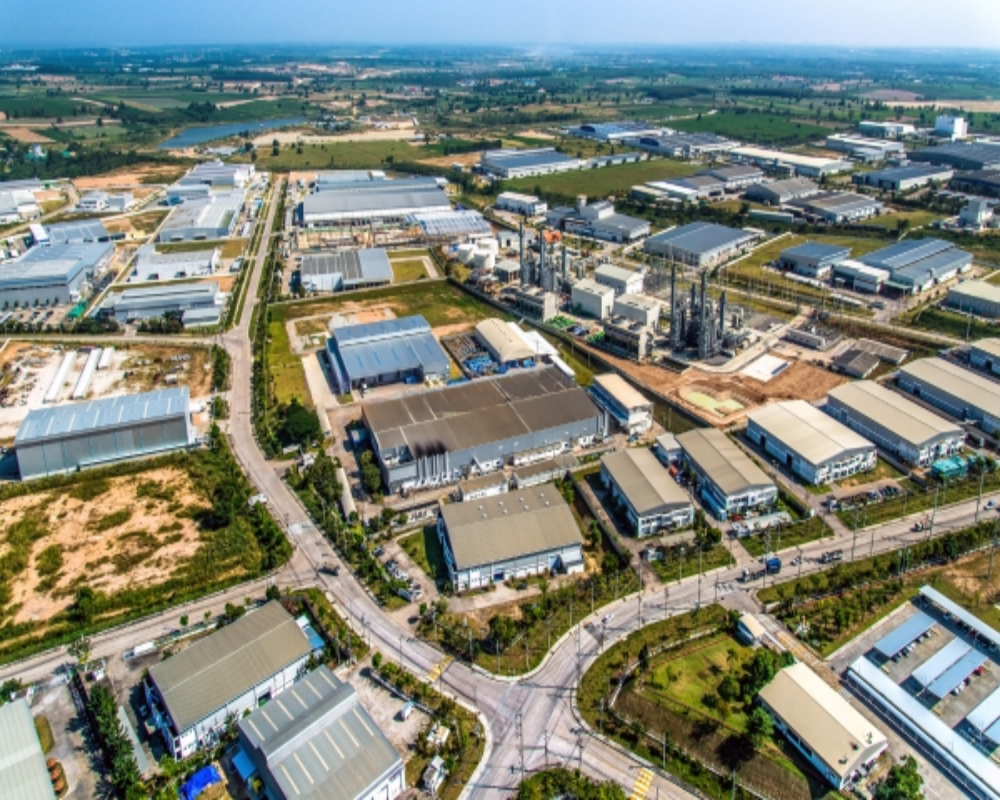
An industrial corridor is not merely a linear tract of industrial land. It is a comprehensive regional development strategy built around major transportation routes—such as highways, rail networks, and ports—and supplemented with auxiliary infrastructure like power grids, water supply systems, communication facilities, and logistics hubs. These corridors often stretch across multiple districts or even states, linking key urban centers, industrial clusters, and export hubs. The core objective is to facilitate economic integration across regions while providing a focused environment for industries to thrive. Governments typically designate these areas for concentrated development, providing policy incentives, investment facilitation, and regulatory support.
In this framework, land becomes more than a passive asset; it is a functional component of an industrial ecosystem. Investors in land within these corridors are not only acquiring physical space but also securing a stake in a broader economic engine. The positioning of land within an industrial corridor significantly enhances its utility and long-term value, making it a compelling asset class for institutional investors, manufacturing companies, infrastructure developers, and real estate investment trusts.
Economic and Policy Framework
Industrial corridors are often embedded within national and regional economic strategies. In India, for instance, projects like the Delhi-Mumbai Industrial Corridor (DMIC) and Chennai-Bengaluru Industrial Corridor (CBIC) are part of a national agenda to boost manufacturing and connect economic zones. Similar initiatives exist in other countries such as China’s Yangtze River Economic Belt or Africa’s Lamu Port-South Sudan-Ethiopia Transport (LAPSSET) Corridor. These are not isolated developments; they are aligned with broader policies like ease-of-doing-business reforms, foreign direct investment incentives, and sustainable infrastructure development goals.
Investors who acquire land within these corridors benefit from a level of policy predictability and administrative support that is rare in other locations. Land use is typically pre-zoned for industrial purposes, environmental and urban planning guidelines are clearly laid out, and utility services are made readily available. This enables faster land development, reduced legal hurdles, and a smoother path to monetizing the land through leasing, sale, or development of industrial infrastructure.
Functional Characteristics of Corridor-Based Land Investment
Industrial corridors are characterized by the functional integration of multiple components—industrial plots, transportation systems, logistics facilities, special economic zones (SEZs), residential townships, and skill development centers. For a land investor, this translates to a dynamic and multi-use environment where land value is influenced not just by location, but also by proximity to economic activities and shared infrastructure. For example, a parcel of land located within five kilometers of a freight terminal in an industrial corridor can command significantly higher value than a similar piece of land outside such a development.
Moreover, the presence of anchor industries and multinational tenants within these corridors tends to create consistent demand for industrial land, both for direct use and for ancillary services such as warehousing, maintenance facilities, or labor accommodations. As industrial corridors evolve over time, land within or adjacent to them often experiences substantial appreciation, driven by infrastructure enhancements, increased employment opportunities, and commercial spillovers.
Investor Considerations and Long-Term Potential
Investing in land within an industrial corridor requires strategic foresight. While the initial costs may include premium pricing due to infrastructure investments and government-led development, the long-term returns are frequently higher due to the corridor’s built-in growth momentum. Investors need to consider factors such as corridor-specific master plans, target industry segments, development timelines, and the role of public-private partnerships. They must also evaluate regulatory stability and potential for scalability in terms of land aggregation and future development.
One of the key attractions of investing in land in an industrial corridor is the diversification of risk. Because these corridors are developed with cross-sectoral integration in mind—often housing logistics, manufacturing, information technology, and ancillary services—they are less vulnerable to industry-specific downturns. The government’s continuous focus on enhancing such corridors through public spending, trade linkages, and foreign collaborations ensures that these regions remain in the economic spotlight, making land investment not just viable but also strategically advantageous.
Conclusion
An industrial corridor, in the context of land investment, is far more than a development zone or a cluster of factories. It is a comprehensive, strategically planned, and policy-backed ecosystem that integrates land, infrastructure, industry, and investment under one umbrella. For investors, these corridors present a unique opportunity to align capital with national development goals, benefit from enhanced infrastructure, and tap into long-term value creation. As global trade routes evolve and nations focus on resilient and diversified industrial bases, land within these corridors stands out as a high-potential asset class. Investing in such land is not only a business decision but a forward-looking step into the future of industrial development and regional economic transformation.
Hashtags
#IndustrialCorridor #LandInvestment #RealEstateDevelopment #InfrastructureGrowth #EconomicZones #UrbanDevelopment #InvestmentOpportunities #SmartCities #LogisticsHub #PropertyInvestment #SustainableDevelopment #RegionalPlanning #CommercialRealEstate #BusinessExpansion #LandUsePlanning #InvestmentStrategy #GrowthCorridors #MarketTrends #RealEstateInvestment #FutureCities